CAN’T BUILD WITH MUD 2013

This time four years ago I had just announced I was running for Mayor and wrote a Thinking Allowed for the Herald on the importance of constructive civic debate – especially in election years. Given the quality of public debate recently, it felt timely to update that piece for election year 2013. Enjoy:

2013 is the year of elections and elections in Fremantle are an exciting time. You can feel the buzz in the air as Fremantle’s best and brightest discuss ideas to make Fremantle an even better place to live and work. Residents, old and new, debate Fremantle’s future and prospective politicians listen and respond as they harness the collective knowledge and wisdom of the community. Positive and innovative ideas visions emerge in an environment of frank and honest debate that respects that all sides have important insights to contribute. Well this is the way it should be.

Instead in 2013 we had a State election of quite a different nature and not one that made many of us proud to be a Freo voter. While some important issues were raised, few were addressed with positive, innovative ideas. The serious challenges facing Fremantle such as our long term sustainability, housing and affordability, and the City’s challenges as a regional centre were barely debated.

Some of the public meetings I attended on important issues like law and order were allowed to descend into vitriolic personal attacks where the complexity of the issues were ignored.  Similarly the recent FICRA public meeting over the youth plaza was also characterised by more of a mob mentality than a civil public discussion on the best location for youth facilities of this kind.  But it is perhaps the recent vitriol towards the prime minister that best demonstrates how low standards in public debate have fallen in recent times.

But it is difficult for important discussions on Fremantle future to occur while the focus is instead on negativity and personal attacks. Every time the debate focuses on individuals and name-calling it ceases to be strategic and solution-focused. Reducing issues to black/white and good/bad too often excludes the potential for synergies and useful compromise. The outcome will be better for all if we play the ball not the person.

In the coming months Fremantle needs an open and positive debate about what kind of city it wants to be. The evidence suggests that without strong leadership Fremantle will slowly decline as regional centre with fewer jobs and less residents. Parts of the Fremantle CBD already have more seagulls than shoppers these days. Fremantle is at a cross roads and while this Council has had a clear agenda of turning Fremantle around there is still a long way to go.

Do we want to remain a busy, vibrant regional centre or just a quiet but pleasant tourist and entertainment town – a quaint Elizabethan village? How do we be a green, sustainable city without substantial new development and affordable housing? How can innovative new developments best complement the City’s heritage?

As we leave one election behind and prepare for two more in September and October it is worth considering that how we behave in these elections reflects on what kind of community we want to be and what kind of Council we want to have. I want to be part of a community that proudly has robust debates over important issues but in doing so encourages and respects a diversity of views. It is worth remembering that often those who engage in negativity and personal attacks do so because they do not have a positive vision for the future. And it is a positive vision that Freo desperately needs right now.

Build with mud 2009

FREMANTLE ARTS CENTRE THIS WEEK – THE CLIPPERTON PROJECT.

This week at the Fremantle Arts Centre is an interesting collaboration called the Clipperton Project.

The Clipperton Project (TCP) is an international initiative that uses notions of exploration, journey and discovery to inspire and empower members of the public to interact with diverse perspectives, peoples and disciplines. What started in 2011 as an expedition to Clipperton Island in the Pacific Ocean is now a multidisciplinary arts/science research project focusing on isolated locations.

The Clipperton Project’s Professional Development Workshop, What We Don’t Know Yet takes as a starting point the fact that the world that we inhabit is a limitless place of absolute fascination. They believe and argue that we are all stakeholders in every debate, and that the key attribute to skill-making is not knowledge but willingness to risk and to step over the horizon, into other territories, other spaces, professions and new ways of free thinking – leaving aside ego, prejudice, localism.

What We Don’t Know Yet will feature speakers and participants from various disciplines, discussing and presenting ideas and ways that professionals of all genres can rethink and review their work in a context broader than a given industry might usually allow. Led by The Clipperton Project founder and director Jonathan Bonfiglio.

Check it out: 
http://fac.org.au/events/317/artspoken-the-clipperton-project-?mid=12

clipperton project FAC

How Bike Friendly Cities Beat the Opposition and Became the New Normal – excellent article


http://www.yesmagazine.org/planet/how-bike-friendly-cities-beat-the-opposition-became-new-normal?utm_source=ytw20130614&utm_medium=email

Former New York mayor Ed Koch envisioned bicycles as vehicles for the future, and in 1980 created experimental bike lanes in Manhattan on 6th and 7th Avenues where riders were protected from speeding traffic by asphalt barriers. It was unlike anything most Americans had ever seen—and some people roared their disapproval. Within weeks, the bike lanes were gone.

Twenty-seven years later, New York mayor Michael Bloomberg and his transportation commissioner Janette Sadik-Khan saw the growing ranks of bicyclists on the streets as a key component of 21st century transportation, and have built more than 285 miles of both protected and unprotected bike lanes. They had studied the success of similar projects in Copenhagen and the Netherlands and learned how to make projects more efficient and aesthetically pleasing.

These “green lanes” and pedestrian plazas were an immediate hit but ignited a small but noisy reaction from people unhappy about projects in their neighborhoods, including Bloomberg’s former transportation commissioner. Lawsuits were filed, while columnists with the conservative New York Post and sometimes-conservative New York Daily News thundered about the inconvenience to motorists and supposed dangers to pedestrians. New York magazine declared the situation a “Bikelash” on its cover.

Pressure mounted on Bloomberg to sack Sadik-Khan and rip out the bike lanes. Anthony Weiner, then a Congressman from Queens and mayoral hopeful, told Bloomberg in 2011 he would spend his first year as mayor attending “a bunch of ribbon cuttings tearing out your [expletive] bike lanes.” Bicyclists everywhere worried that progress toward safer streets in New York and around the continent would be slowed down.

Two years later, Sadik-Khan is still commissioner and the Department of Transportation continues to install bike lanes and pedestrian plazas across the city.

Two-thirds of New Yorkers call bike lanes a good idea in the most recent New York Times poll, compared to only 27 percent who oppose them. All of the major candidates to replace Bloomberg as mayor expressed support for bicycling at a recent forum, notes Paul Steely White, executive director of the local group Transportation Alternatives.

“Bike lanes are the new normal in New York,” White adds. “People in East Harlem are saying we want bike lanes like those in other parts of town.”

And now another of Bloomberg’s and Sadik-Khan’s big ideas to improve New York has hit the streets: the bike sharing system called Citi Bike, which is the largest in North America with 6,000 bikes available at 330 stations in Manhattan and Brooklyn. There was an inevitable reaction from neighbors when the racks went in on the their blocks, but a lot of the criticism is now coming from people in neighborhoods without Citibikes who want them .

What rallied the public around bicycling? “It was a combination of things,” reports Ben Fried, who chronicled the debate as editor of Streetsblog, a web magazine covering transportation in New York. First, independent polls debunked the myth that New Yorkers disliked bike lanes. “Actually a strong majority from throughout the city supported them,” Fried told me.

Fried also credits neighborhood leaders and bicyclists with mobilizing grassroots support for bike lanes, both on the web and at public meetings. “In the end, politicians need to see that bike lanes are a win for them.”

Pressure for new biking facilities came also from business leaders who see better biking conditions as anasset for their companies. High-tech executives at 33 firms—including Foursquare, Meetup, and Tumblr—urged Bloomberg to implement the bike share system “as a way to attract and retain the investment and talent for New York City to remain competitive.” The Hearst Corporation recently announced it will pay employees’ cost to join the Citi Bikes program. “It’s a cool New York thing to do and good for fitness,” says Hearst spokesperson Lisa Bagley. “Our decision is driven by what are employees are interested in.”

Tim Blumenthal, president of PeopleForBikes and the sister Green Lane Project, stresses that “Bike issues need to framed in the context of what they mean to the city, not just what they mean to people who bike. In New York City, for example, more green lanes, better bikeway networks, and the new Citi Bike system will benefit all residents and visitors by reducing traffic, noise, and air pollution—making city life a little less frenetic for everyone.”

All this represents good news for cities coast-to-coast. “If you can do it here, you can do it anywhere,” says White, paraphrasing the old song “New York, New York.”

Other communities will no doubt face their own version of “bikelash,” but the high-profile debate in New York over bike lanes highlights two key assets of protected green lanes:

1. Bike lanes create safer streets for everyone. “It’s the safety stats that carried the day,” notes Ben Fried, editor of Streetsblog. “They’re pretty indisputable.” Crashes for drivers, pedestrians, and bicyclists drop on average by 40 percent on streets with green lanes, and sometimes as much as 50 percent, according to a memorandum from Deputy New York Mayor Howard Wolfson. Bike lanes of every kind also lead to significantly fewer bicyclists riding on sidewalks, Fried notes.

2. Bike lanes are good for business. Shop owners are sometimes zealous opponents of bike lanes, which they claim will suffocate business by reducing traffic and eliminating parking. Yet businesses on 9th Avenue, the first major green lane in the city, saw a 49 percent rise in retail sales, compared to 3 percent across Manhattan as a whole, according to research by the New York City Department of Transportation. Another study of consumer patterns by researchers at Portland State University found that shoppers who arrive by bicycle spend 24 percent more at stores per month than those who drive.

Unfamiliar ideas like bike lanes always spark opposition—at first. “Pushback is inevitable,” Fried explains. “It doesn’t mean the project is flawed. Once it’s built, the constituency for it will grow.”

The issue isn’t simply a New York state of mind. Complaints about a “war on cars” have echoed around Seattle from a small but persistent chorus opposed to bike lanes. In response, the Cascade Bicycle Club commissioned a poll of Seattle voters (conducted by the independent research firm FM3 using a scientifically rigorous sample of 400 respondents), which found that 79 percent view bicyclists favorably, 73 percent want to see more protected green lanes, and 59 percent support “replacing roads and some on-street parking” to build green lanes.” Only 31 percent believe Seattle is “waging a war on cars.”

(Green lanes in Washington, D.C. have also been denounced as a “war on cars,” even though only one percent of D.C.’s roads are dedicated to bicyclists, according to computations by Washington City Paperreporter Aaron Wiener.)

In Chicago, there’s no organized opposition to Mayor Rahm Emanuel’s vision of boosting the city’s economy by providing 100 miles of green lanes and 550 more of on-street bike lanes. More than 16 miles of green lanes were built in 2012. One project on the South Side’s historic Martin Luther King Drive, however, did raise aesthetic concerns, which were solved by shifting the protected green lane to a parallel street and adding buffered bike lanes (wide swaths of paint separating car traffic from bikes) to King Drive. The community engagement process around this issue resulted in neighbors forming the Bronzeville Bicycling Initiative to encourage more people to bike in this historically African-American community.

None of this stopped Chicago Tribune columnist John Kass from warning that the mayor’s plans “foreshadow the day that cars will be illegal.” He also targets “little bike people” as “free riders” who don’t pay to keep up the roads and as scofflaws who defy traffic laws.

Ron Burke of the Active Transportation Alliance sees “little bike people” as a compliment, noting “how little space we take up on the roadway, how little wear and tear we cause, and how little our facilities cost within the grand scheme of transportation spending.”

Burke agrees with Kass that bicyclists who endanger other people should be ticketed, but deconstructs his claim that motorists pay their own way on the streets. Between 24 and 38 percent of total road costs in Illinois are not covered by user fees such as gas taxes and vehicle stickers, even when you count federal funding as user fees, Burke explains, citing a study from the Environmental Law and Policy Center.

Kass is one of a number of commentators across the country who regularly target bikes and bicyclists. After New York Daily News columnist Denis Hamill wrote, “I hate bike lanes…they are steering some people like me to road rage” one reader responded “All I hear is an old man yelling, ‘Get Off My Lawn.’”

China Part Two – Jinzhou and the challenging road to a more sustainable future

I came to Jinzhou City to attend, along with others mayors from around the world and officials from China and the United Nations, a conference on sustainable coastal cities and to share what we have been doing at the City of Fremantle in creating a green, low carbon city.

I met with and heard Chinese Government officials who proudly pronounced their commitment to renewable energy and I saw this boldly demonstrated with whole hillsides covered in solar PV, miles of super efficient LED street lights run off solar panels and innovative wind power installations (see below).

But these sustainability achievements – many that would put most western cities to shame – were demonstrated against an unsettling backdrop of soulless high-rise development, the literal mining of whole mountains, China’s building of a new coal-fired power station every 10 days, and an approach to oceans that was more about nationalistic utilisation than it was about marine conservation.

My time in Jinzhou was a jarring set of juxtapositions that are still bouncing around unresolved around my head. It is clear the road to sustainable development for China is not a straight-forward one. Interestingly the governments of Jinzhou City and China showed a far greater commitment to sustainable development than we have seen in Australia for many years. Similarly, the Chinese people showed a much stronger engagement and commitment to addressing climate change than I now see in Australia- despite the Chinese using less than quarter of the carbon emissions per capita compared to us Aussies.

Despite this it was hard not to come away with a view – perhaps magnified by the grey polluted skies – that development and industrialisation trumps all else in China. Like the rest of the world, the road to a more sustainable planet is one is which the challenges greatly out-number achievements. But by attending sustainable development forums like this you can only hope start a global action for a greener future inches a little closer.

This slideshow requires JavaScript.

China Part One – urbanisation and sustainable development

I have just returned to Freo after spending the last week in China (where, incidentally, blogs are banned) on the invitation of the Chinese Government to speak at a forum on sustainable development for coastal cities. For those of you who have not yet been, China is truly an extraordinary place. It is like no other place I have been and its sustainable development challenges are immense.

This is perhaps most dramatically articulated in its urbanisation challenge. On my four hour  fast train (over 200km/h) from Beijing to Jinzhou City where the conference was I saw a level of urbanisation that easily surpassed that I saw and wrote about on my trip from Hong Kong to Beijing last year. In fact, China is urbanising and developing at a scale that is unprecedented at anytime in human history and the changes to the landscape of the Chinese countryside are truly staggering.  Before the GFC it was said that half the world’s cranes were in Dubai. I am pretty confident they have all now moved to China. Within the first hour a lost count on the number of 30 plus storey apartment building under construction on the urban fringes of the cities we passed through. Hundreds isn’t an exaggeration. Each of these is part of the Chinese Government’s stated policy of moving  400 million more people to the current Chinese urban population in the next decade. The target is two-thirds of China’s population into urban centres by 2030 – China’s urban billion.

This is a social upheaval of epic proportions and in the process it has created an even bigger property bubble with the ruling Communist Party planning to spend $US6.4 trillion on urbanization program. These are mind-boggling numbers. Who plans to actually buy these millions of unfilled apartments is as much of mystery as how will a predominantly rural population cope with the massive cultural shift into high rise.

Of course,  Australia’s prosperity is now intimately linked to the success of this very ambitious transition. The decade ahead will be fascinating to watch.

This slideshow requires JavaScript.

A PEEK INSIDE THE HENDERSON STREET WARDERS COTTAGES

Last week I finally got a peek inside the Henderson Street Warders Cottages with some City of Freo staff.

These are the oldest terrace houses in WA, dating back to the 1850s.

The cottages were amazing with challengingly steep stairs, the widest floor boards I have ever seen, low doorways from a era when we were all a bit shorter and some rather rustic living conditions with one family living upstairs and another downstairs

Just as amazing were the secret back gardens behind each of the terraces – full of little tin sheds, laneways and mature trees. It was like a secret inner-city parkland – a part of Fremantle I had never been to before or even new existed. I like the idea of opening this secluded space up to the public more often.

I have posted some photos below of the gardens and cottages for you to enjoy.
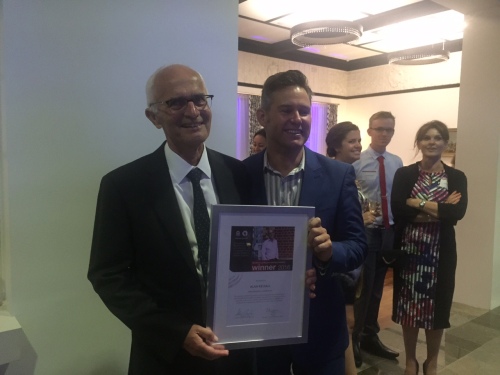
Council will consider whether we take over control of the terraces or not in the next couple of months and we look forward to your feedback on that.

This slideshow requires JavaScript.

WHAT WE WOULD LIKE FREO TO BE KNOWN FOR IN 2029 – YOUR FEEDBACK

Fremantle 2029 Community Visioning Project facilitator James Best has had the onerous job of reading our handwriting and transcribing and compiling the 1000 odd comments to the questions posed by our speakers to the launch.

Below I have pasted a smattering of your 250 odd responses to the first question which was:

What is the one thing I like Freo to be known for in 2029 ?

James has kindly grouped a good selection of the comments into following themes (and I have pasted  the full comments under each of these at the end of this blog post).

  • Fremantle’s CBD is the cultural capital of WA – a fabulous place to live and work and enjoying a diverse range of services and activities.
  • People and family – an inclusive and diverse community actively caring about everyone
  • Environmental and community sustainability – walkability, cycling, accessibility
  • Leadership, innovation and capability focused on future conditions
  • Excellent Architecture and town planning & design.  Urban Renewal and integration with leading edge sustainability and sympathetic to our unique heritage and character
  • Affordable living & quality of life – especially housing for ordinary people
  • Economic Development, Business and education
  • Culture and the arts, music, heritage, and sports

Thanks for everyone for participating in the launch and your feedback don’t forget to put on your diaries the first fully participatory workshop on the 27th of June. Enjoy the comments below and this wordle:

wordle 2

Fremantle’s CBD is the cultural capital of WA –  a fabulous place to live and work and enjoying a diverse range of services and activities.

A vibrant 24-hour city with attractions including: high-quality retail/ well maintained heritage fabric/ livable city for residents of all ages/ a safe city where families can enjoy the night life/ and have the highest quality public spaces possible.

Additional housing allows more families to live downtown and enjoy access to work, services, great beaches and other public facilities

Fremantle in 2029 is the alternative for perth people enjoying a vibrant and modern yet classical place – sustainably advanced city

In 2029 we will be the cultural capital of WA for all things we are known for now but on a larger scale providing services and events for all people of all ages

We enjoy our urban vitality with economic activity and prosperity.  Our culture focuses on interactions of all sorts especially with children and dogs and celebrating our beach culture with sandy toes while drinking mohitos with friendly local people that talk to each other.

A place where lots of people live in the centre of things

People and family – an inclusive and diverse community actively caring about everyone

Celebrated for our diverse community of all ages and abilities cultures and faiths

An inclusive place providing all people with a place to live work and play.  A fun place full of things for everyone to do

Freo in 2029 is the most viable inclusive and vibrant community in Australia with the best blend of old and excellent new Architecture and urban landscapes

A city that is progressive, forward thinking, youth friendly, really welcoming and inviting to the people who live in Fremantle, as well as people from all around the world

An inclusive place that promotes and accepts all people regardless of social status gender or race through community projects that encourage equality and togetherness between all generations.

We actively reach out to people in the shadows of our society in meaningful ways – to the disadvantaged, the homeless, the disengaged and alienated.

A richness of possibilities — a place of variety and diversity

Environmental and community sustainability – walkability, cycling, accessibility

I will be able to walk to obtain everything I need for a good quality of life – to work, to the shops, for my social life, for exercise facilities, medical services, arts & culture, access to the beach & river, and a very good train service in case I want to venture house out of paradise

The most walkable, vibrant, architecturally beautiful and sustainable city in Australia

A tram system all around Fremantle and down to Coogee and only pedestrians, public transport and bicycles in the town centre

Fremantle will be known for being the first carbon neutral city in Australia (in the world ?)

People living with ecological values in practice through connected inner city living

World’s best practice examples of sustainable living and education

You choose to live in Fremantle so you can walk or bike to everything you need you can stay healthy and green by not driving but you can take public transport when you sprain your ankle

Leadership, innovation and capability focused on future conditions

Innovation and future thinking, practical everyday sustainability and a strong vibrant and resilient community

A leader in a sustainable economy and how to be a progressive city that embraces a sense of the equality and fun

A place that is adventurously challenging the status quo from a confident foundation of its unique heritage

A city known for its innovation and resilience as well as its intellectual think tanks

A pioneer of the gross city happiness index that creates happiness based on the new economy, social capital, societal health, human dignity and working collaboratively

Thought leadership groups (Fremantle Society, Group 4 Fremantle, Freo Network, FERN etc) are working positively together for Freo and facilitating conversations about what needs to be done to meet future challenges

Excellent Architecture and town planning & design.  Urban Renewal and integration with leading edge sustainability and sympathetic to our unique heritage and character

Fremantle is known for its high-quality contemporary buildings and public spaces that compliment the heritage but provide sustainable and affordable lifestyles

A successful and vibrant city with a good balance between its economic environmental social and heritage elements with it’s working port continuing to operate efficiently and sustainability

Fremantle is known for its own architecture pragmatically designed to suit its conditions of climate, scale, adaptability, density, social equity and diversity of housing choices

Safe friendly neighbourhood scale parks and facilities, creative and tolerant people, a place that did not sell out its soul to high-rise and quick fixes.  A place that gave enough thought to preserve its wonderful buildings with sensitive modernisation and adequate breathing space around them to maintain their intrinsic value, access to sunshine and free of other impacts of overcrowding.

Freo in 2029 is linked with a relaxed, yet vibrant, multicultural arts and entertainment hub connected to the city, river, and ocean with walkways cycleways green spaces and a diverse mix of spaces and places for people of all ages.  It has retained buildings of its heritage that enhance the special sense of community

Its highest quality urban design with the most beautiful public realm with quality architecture — not backward looking — but respectful of heritage yet innovative and timeless

The Port has been relocated to create a sustainable eco city

A vibrant sustainable friendly city where everyone feels welcome and kids have spaces of fun appropriate and welcoming for all ages

Affordable living & quality of life – especially housing for ordinary people

Affordability for all demographics and ages.  Freo is a place of inclusivity, variety, vibrancy a place for ages to be able to afford to live here

Housing is close to work and community facilities such as kindy, school, health care centres and other services

Freo is recognized for having the best quality of life in Australia

Changing demographics is factored into the housing mix/ availability – not all of us want a mansion for just me living on my own.

Building more houses will accommodate more people and hopefully at a price that people are able to afford.  I would like Fremantle to continue to be an example of a great community and a good place to live

Economic Development, Business and education

By being a business friendly city that attracts people into the centre every day for work or leisure thereby maintaining a strong base for all to enjoy this great city.

Thinking commercial — being a quaint fishing village that attracts tourists on weekends and leaves deserving residents alone during the week — no crime, no homeless, no empty stores, no op shops and no sex shops.

The defence of the 2029 America’s Cup building on 1980’s America’s Cup defence that triggered the biggest improvement in Fremantle indicates maybe we need another big idea to trigger the next change

Shops that support locally produced goods.  A great place to live and go about your business

A vibrant local community with a thriving local economy and local food supply


Culture and the arts, music, heritage, and sports

To be the centre for cultural and outdoor activities in the metropolitan area

It’s flourishing original and world music scene

Being the centre for arts and culture in W.A – contribution to social resilience

Our culture and the arts attract artists and visitors from around the world – learning and sharing with global connections

A Noongar Centre for culture and indigenous arts

Places where good art can happen and where artists are valued

It’s cultural and built heritage which coexists in a modern vibrant city for all parts of the community and visitors to enjoy

Awesome festivals and events that can’t be missed

Strengthening connections between culture food, arts and music

World class sporting facilities

Follow

Get every new post delivered to your Inbox.

Join 78 other followers